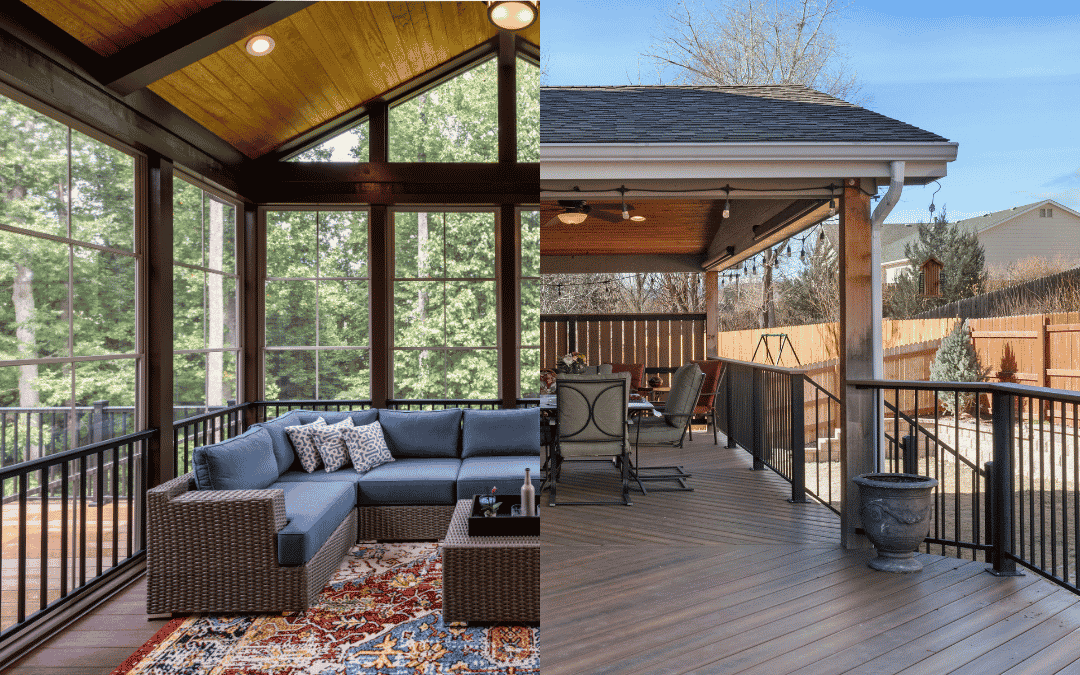
Breaking Down the Base Costs
When homeowners in Chattanooga begin planning outdoor living spaces, the first question typically centers on budget. An open deck generally starts at a lower price point, with basic pressure-treated wood decks averaging between $15 and $30 per square foot for materials and labor. A 12×16-foot open deck might run between $2,880 and $5,760 before upgrades or premium materials enter the picture.
Screened porches introduce additional structural requirements that increase initial investment. The same 12×16-foot footprint typically costs between $25 and $50 per square foot when you factor in screening materials, framing, roof structure, and foundation work. That translates to roughly $4,800 to $9,600 for a basic screened porch before customization. The gap widens when you consider that screened porches often require permits and inspections that open decks may not, adding another layer of expense.
Tennessee’s humid summers and occasional severe weather influence these numbers significantly. Many Chattanooga homeowners discover that their initial deck budget creeps upward once they account for moisture-resistant fasteners, proper drainage, and weather-appropriate finishes. Working with an experienced outdoor living contractor helps clarify these regional considerations early, preventing budget surprises as your project unfolds. Understanding these foundational costs sets the stage for evaluating what materials and features will deliver the best value for your specific needs.
Materials Make the Difference
Material choices dramatically reshape your final investment and long-term satisfaction. For open decks, pressure-treated lumber remains the most economical option, but composite decking has gained popularity in the Chattanooga market due to its resistance to moisture and minimal upkeep requirements. Composite materials typically add $10 to $20 per square foot over basic wood, yet many homeowners find the trade-off worthwhile when factoring in reduced maintenance time and costs over the structure’s lifespan.
Screened porches require decisions on multiple material fronts. Beyond the flooring choice, you’ll select screening type (fiberglass, aluminum, or specialty solar screening), roofing materials, and structural framing. Standard fiberglass screening costs roughly $2 per square foot installed, while premium pet-resistant or solar-control screens can reach $5 to $8 per square foot. Roofing options range from simple metal panels to architectural shingles that match your home’s existing roof, with costs varying from $4 to $12 per square foot depending on complexity and material quality.
The humid climate around Chattanooga accelerates wood deterioration, making material selection particularly consequential. A home addition contractor familiar with local conditions can recommend combinations that balance upfront investment with durability. Cedar and redwood offer natural rot resistance at moderate price premiums, while engineered products provide warranties that standard lumber cannot match. These material decisions ultimately define both your immediate budget and your future maintenance obligations.
Labor Costs and Project Timelines
Labor represents a substantial portion of either project, but screened porches demand significantly more skilled work hours. A straightforward open deck can often be completed in three to five days by a two-person crew, with labor costs typically accounting for 40 to 50 percent of the total budget. Screened porches require coordination among framers, roofers, electricians for lighting and fans, and finish carpenters, extending timelines to two or three weeks for most residential projects.
Hourly rates for skilled carpentry in the Chattanooga area generally range from $50 to $85 per hour, though experienced construction company teams may offer project-based pricing that provides better value and clearer budget expectations. Screened porch construction also frequently requires electrical work for ceiling fans, outlets, and lighting, adding $500 to $1,500 depending on fixture choices and circuit requirements. These specialized trades introduce scheduling complexities that can extend your project timeline if not coordinated properly from the outset.
Summer construction season in Tennessee brings both advantages and challenges. Crews stay busy, which can mean waiting lists stretch longer, yet weather conditions favor outdoor work with fewer rain delays. Many homeowners find that booking a remodeling company during early spring secures better scheduling flexibility for summer completion. Understanding labor dynamics and realistic timelines prevents frustration and helps you plan around family schedules, upcoming events, or seasonal use patterns. Transparent communication with your contractor about timing expectations ensures everyone works toward the same completion goals.
Long-Term Maintenance Reality
Initial construction costs tell only part of the financial story. Open decks require regular maintenance to preserve appearance and structural integrity, particularly in climates with high humidity and temperature fluctuations. Wood decks typically need cleaning, sealing, and staining every two to three years, with each maintenance cycle costing $500 to $1,200 for professional service or requiring substantial DIY time investment. Composite decking reduces this burden significantly, generally requiring only periodic washing to maintain appearance and warranty coverage.
Screened porches shield their flooring from direct weather exposure, which can extend the life of wood finishes and reduce maintenance frequency. However, screening itself requires attention. Tears from falling branches, pet damage, or simple wear necessitate repairs averaging $100 to $300 per panel. Complete rescreening projects every 10 to 15 years can run $1,000 to $3,000 depending on porch size and screening material quality. Roof maintenance adds another consideration, with periodic inspections and occasional repairs needed to prevent water intrusion.
Chattanooga’s weather patterns, including intense summer sun and occasional ice storms, test outdoor structures year-round. Many homeowners underestimate how quickly maintenance costs accumulate, particularly for wood structures. A basement remodeling services provider who also handles outdoor projects can often identify maintenance-reducing construction techniques during initial planning, such as improved drainage systems or upgraded fasteners that resist corrosion. Factoring maintenance into your total cost of ownership provides a more accurate comparison between screened porches and open decks over their useful lifespan.
Making Your Final Choice
Choosing between a screened porch and an open deck ultimately depends on how you plan to use the space, your budget flexibility, and your tolerance for ongoing maintenance. Open decks excel when you want maximum sun exposure, unobstructed views, and lower initial investment. They create ideal spaces for grilling, sunbathing, and entertaining large groups in pleasant weather. If your budget caps out around $6,000 and you enjoy occasional weekend maintenance projects, an open deck may align perfectly with your priorities.
Screened porches deliver protected outdoor living that extends usability during mosquito season and light rain, common conditions during Chattanooga summers. The higher upfront cost buys you a space that functions almost like an additional room, complete with ceiling fans, lighting, and furniture that can remain in place year-round without weather damage. Families with young children or pets often find the enclosed space more practical, while those who suffer from seasonal allergies appreciate the filtered outdoor experience.
Return on investment varies by neighborhood and buyer preferences, but both structures generally recoup 60 to 80 percent of their cost at resale. The decision should prioritize your family’s lifestyle and how you’ll genuinely use the space rather than focusing solely on resale projections. Consulting with professionals who understand local building codes, material performance in Tennessee weather, and realistic project budgets removes guesswork from the planning process. Whether you choose an open deck or screened porch, working with qualified professionals ensures your investment delivers the outdoor living experience you envision without unexpected costs derailing your project.